Advantage, Disadvantage, and the Mighty d20
By Arthur D Masters & Tia
If there's one mechanic that defines modern tabletop play, it's advantage and disadvantage. It's elegant, it's swingy, and it quietly reshapes your chances more than most players realize.
What it actually does
With advantage, you roll two d20s and keep the higher. With disadvantage, you roll two and keep the lower. Simple — but the effect on your odds is dramatic. Advantage is worth roughly a +5 on average in the middle of the d20 range, and it makes those coveted natural 20s almost twice as likely to appear.
When they cancel
Here's the rule new players miss most: advantage and disadvantage don't stack. If you have even one source of each, they cancel out completely and you roll a single, normal d20 — no matter how many of each you've collected. One good thing and one bad thing, and you're back to a straight roll.
Rolling it in Legend Roller
Flip a roll to advantage or disadvantage right on the die row, and the app rolls both d20s, shows you both results, and keeps the correct one — with the discarded die still visible so everyone at the table can see the fate you dodged (or missed).
Use it with intent
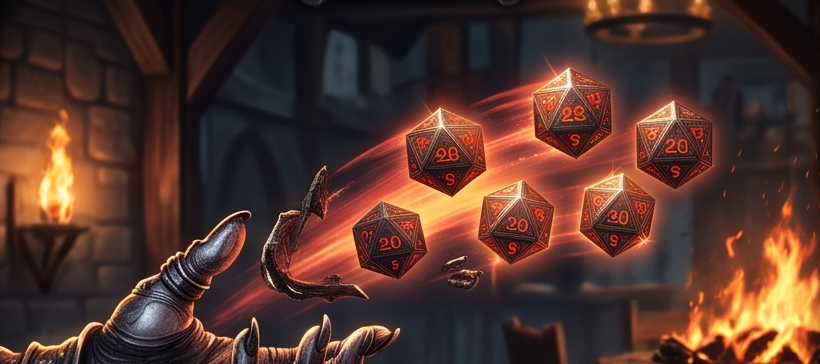
Advantage isn't just a number — it's a story beat. The rogue helping you pick the lock, the high ground in a fight, the moment of inspiration. Save it, earn it, and when you get it, savor the two dice tumbling toward destiny.
Roll Fate. Rule Realms. © 2026 Iron Code Studios